
Can You Pressure Wash Granite Surfaces Safely? What You Need to Know
Granite Is Durable, But It Still Has Weak Points
Granite's one of the hardest natural stones on the planet. It sits around a 6 to 7 on the Mohs hardness scale, putting it well above most building materials you'd find on a driveway or patio according to the Mineralogical Society of America. So people figure it can take anything, including a pressure washer cranked all the way up.
That assumption gets people into trouble. Often.
Here's the thing most guides blow right past: granite's toughness is about compression strength, not surface resistance. The stone itself won't crumble under a heavy load. But the surface? Especially if it's been sealed, polished, or has any existing micro-cracks? Totally different story. We see this constantly on jobs in Longwood. A homeowner's got a gorgeous granite outdoor countertop or a stone-faced entryway that's been in place for years with zero problems. Then they hit it with a pressure washer at 3,000 PSI and suddenly the surface looks hazy, the sealer's lifted in patches, and a few spots have started to pit.

The granite didn't fail because it was weak. High-pressure water just found the weak points that were already there.
Those weak points fall into a few specific categories. Existing micro-cracks come first. Granite forms under intense heat and pressure deep underground, and that process leaves behind natural fissures. Normal ones. Not structural defects. But high-pressure water forcing its way into those fissures repeatedly widens them over time. According to the Natural Stone Institute, freeze-thaw cycles combined with water infiltration are one of the leading causes of stone surface deterioration. We don't deal with hard freezes often here in Florida, but intense afternoon rain and rapid temperature swings create similar stress on stone surfaces. Same result, different mechanism.
Sealer breakdown is next on the list. Most granite surfaces, especially countertops and decorative stone, have been sealed with a penetrating or topical sealer. Pressure washing at the wrong angle or too-high PSI strips that sealer away in minutes. Gone. And once it's gone, the stone's porous again. Moisture, mold, and staining agents get in fast. The Marble Institute of America recommends resealing granite surfaces every one to three years under normal conditions, but that timeline shrinks after aggressive cleaning.
And here's the one that surprises most people: grout and mortar joints. If your granite's installed as tile, pavers, or a cladded surface, the joints between stones are almost always softer than the stone itself. Portland cement-based grout has a compressive strength well below granite. High-pressure water cuts right through it. We pulled together a job quote last spring for a Longwood homeowner whose granite paver patio looked structurally fine from the street. Up close, the grout joints were hollowed out in several sections. Not from age. From a single pressure washing session the previous season. Twenty minutes with the wrong equipment undid years of solid installation exactly what licensed pressure washing professionals are trained to identify before a single trigger gets pulled.
Polished surfaces carry their own risk too. That shine on polished granite comes from a physical process where the stone's ground progressively finer until it reflects light. The finish sits right on the surface. A narrow-angle pressure washer tip held too close will abrade it. You won't see the damage right away, but in direct sunlight the surface will look dull and uneven within a few months. Durable doesn't mean invincible. Granite earns its reputation over geological time. It doesn't automatically forgive a five-minute cleaning mistake.
Pressure Settings Matter More Than Most People Realize
Most people grab a pressure washer and crank it up. More pressure means cleaner, right?
With granite, that logic will cost you. The surface looks tough, and it is, but the finish, the sealant, and the grout lines around it aren't. We see this constantly on jobs around Longwood, especially on older outdoor kitchens and pool decks where someone went too hard with a rental unit before calling us. The safe range for cleaning granite is generally 800 to 1,200 PSI. According to the Marble Institute of America, natural stone surfaces shouldn't be cleaned above 1,500 PSI without professional assessment first.
That upper limit sounds generous until you realize most consumer pressure washers start at 1,600 PSI and go well past 3,000 PSI at full power. At 2,000 PSI or higher, you're not just cleaning. You're stripping. The sealant layer protecting granite from moisture, staining, and Florida's hard water minerals gets blasted off in minutes. Once that layer's gone, the stone becomes porous again. And in Central Florida's heat and humidity, an unsealed granite surface will absorb everything. Algae. Tannins from oak leaves. Iron from irrigation water. We pulled up a patio job last spring off Ronald Reagan Boulevard where the homeowner had pressure washed their granite pavers three times over two summers. The surface looked clean but felt rough, and the staining underneath had gone deep. Sealant? Completely gone.
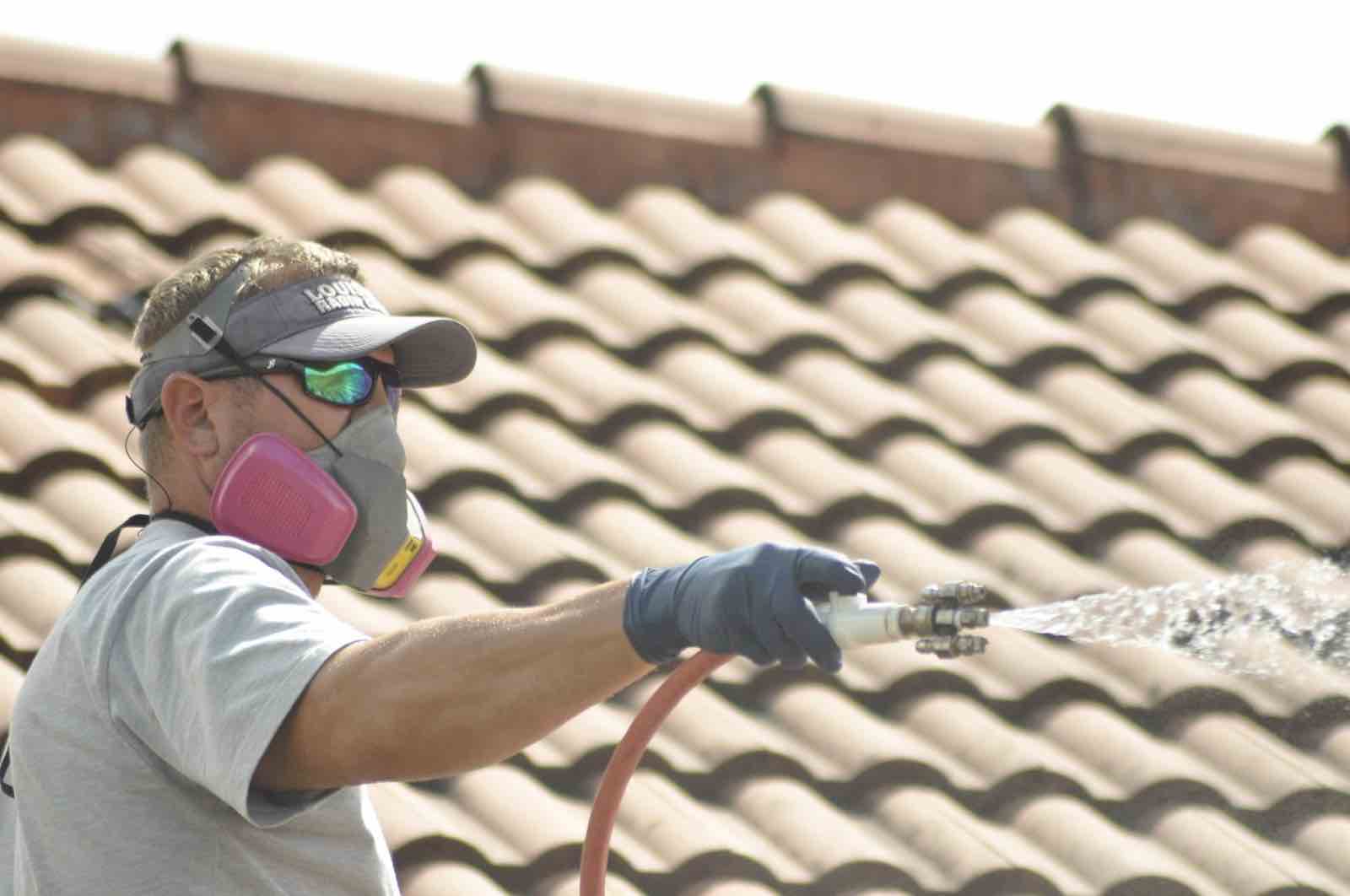
The nozzle angle changes everything too. A zero-degree red nozzle concentrates the full force of the water into a pencil-thin stream. That's never appropriate for granite. Never. A 25-degree or 40-degree nozzle spreads the spray and reduces impact pressure at the surface. But here's what most guides skip entirely: holding even a 25-degree nozzle six inches from the surface at 1,200 PSI delivers far more impact force than holding it 18 inches away. Distance is half the equation. And it's the detail most DIYers miss completely.
Keep the nozzle at least 12 to 18 inches from the granite surface at all times. Move in slow, consistent passes. Don't hover over one spot. Keep the spray moving parallel to the surface, not pointed straight down into grout lines or seams. Grout and caulk joints are the first things to fail under high-pressure water, and once those joints open up, water gets underneath the stone. That leads to shifting, cracking, and efflorescence. Those white mineral deposits that bleed up through the surface. Yeah, they're as annoying to fix as they look.
Water temperature matters too, and it doesn't get nearly enough attention. Hot water above 140°F can cause thermal shock in natural stone, especially on cooler mornings when the granite slab itself is still cold. According to the Natural Stone Institute, rapid temperature changes can open micro-fissures in granite that are invisible at first but expand over time with repeated exposure. Cold water's always the safer choice.
If you're renting a pressure washer from a hardware store for a weekend project, the machine almost certainly doesn't have a reliable PSI readout. The dial settings are approximate at best. A professional-grade unit with a regulated, adjustable output is a completely different tool. We've worked on natural stone surfaces across Central Florida for years, and we use equipment that lets us dial down to 800 PSI with confidence and switch nozzles mid-job depending on what we're working on. That level of control is genuinely hard to replicate with a box-store rental, no matter how careful you are. So if you're unsure, calling a pro is the safer bet.
The pressure setting isn't a minor detail. It's the single biggest variable in whether a pressure washing job protects your granite or damages it. Get this wrong once, and you're looking at resealing at minimum. Or resurfacing if the stone's been etched or the joints have failed.
Need help with can you pressure wash granite surfaces safely? what you need to know?
Call now for a free estimate. Ragin Cajun is ready to help.
Cleaning Solutions Can Protect or Destroy Granite Depending on What You Use
Most people focus entirely on water pressure. Makes sense. But the cleaning solution you use, or carelessly grab from under the sink, can do more lasting damage than a pressure washer ever could.
Granite's a natural stone. Dense, yes. But not immune to chemistry. Acids are the biggest threat, and this is where homeowners get burned constantly. Vinegar, lemon juice, and plenty of "all-natural" cleaners are acidic enough to eat into granite's surface over time. According to the Marble Institute of America, acidic cleaners, even mild ones, can dull the finish and break down sealant on natural stone surfaces. [Source: Marble Institute of America, naturalstoneinstitute.org] You won't always see the damage right away. That's exactly what makes it dangerous.
Bleach is another one we have strong opinions about. It won't etch granite the way acid does, but it strips sealant aggressively. Once the sealant's gone, the stone's exposed. Moisture, stains, and pressure washing water can all push deeper into the surface. We pulled up a quote last spring from a Longwood homeowner who'd been using a diluted bleach spray on her outdoor granite steps for two seasons. The stone looked clean. But when we tested the sealant, it was completely gone. The granite had started absorbing water like a sponge.
Now here's what most guides get wrong. They tell you to avoid harsh cleaners and leave it at that. "Harsh" is doing a lot of work in that sentence. Some of the gentlest-sounding products, citrus-based degreasers, "stone-safe" multi-surface sprays, even some dish soaps, contain surfactants or pH levels that degrade granite sealant over repeated use. The safe range for granite cleaners is a pH between 7 and 10. Anything below 7 is acidic. Anything above 10 is caustic. [Source: Natural Stone Institute, naturalstoneinstitute.org] Simple numbers. Worth knowing before you buy anything.
So what actually works? A pH-neutral stone cleaner used with low-pressure rinsing. That's the right combination for most granite surfaces. Warm water alone handles light surface dirt better than most people expect. And if you're pressure washing a sealed granite surface, don't apply any chemical cleaner under pressure. Forcing a cleaning agent into the stone's pores under high PSI can compromise the seal from the inside out.
Soap buildup is a real problem too, especially outdoors. Some stone cleaners leave a film that attracts more dirt over time. On outdoor granite in Central Florida, where pollen and humidity are relentless from spring through fall, that film turns into a grimy layer fast. We've seen surfaces that look worse two weeks after cleaning than they did before, all because the wrong product was used and the residue wasn't fully rinsed. That's usually what's going on when someone calls us saying their granite "just keeps getting dirty again."
One practical tip from the field: always rinse granite surfaces thoroughly after any cleaning, even with a product labeled safe for stone. Residue left in the sun, especially on dark granite that absorbs heat, can bake into the surface and become much harder to remove later. A low-pressure rinse from a garden hose is often enough. Save the pressure washer for the final rinse pass at the right PSI, not as the primary cleaning method.
Use pH-neutral products made specifically for natural stone. Skip the vinegar hacks and the bleach shortcuts. Your cleaning solution choice matters just as much as your equipment settings. Both of them do. If you've got granite that's been through a rough cleaning or two and you're not sure where things stand, we're happy to take a look. Give us a call.
Frequently Asked Questions
Can you pressure wash granite surfaces without damaging them?
Yes, you can pressure wash granite safely, but only at the right settings. Keep pressure between 800 and 1,200 PSI. Use a 25-degree or 40-degree nozzle and stay at least 12 to 18 inches from the surface. Never use a zero-degree red tip on granite. The stone itself is tough, but the sealer, polish, and grout joints around it are not. Wrong pressure or the wrong angle can strip your sealer and cause damage that takes years to show up fully.
Does Longwood's climate make pressure washing granite riskier?
Yes, Central Florida's climate adds extra risk when cleaning granite. Longwood gets intense afternoon rain, rapid temperature swings, and high humidity year-round. These conditions stress stone surfaces the same way freeze-thaw cycles do in colder states, just through a different mechanism. Moisture that gets into micro-cracks or under lifted sealer expands and contracts with the heat. That slowly widens cracks over time. Algae and mold also grow faster here, which tempts homeowners to use higher pressure than the stone can handle.
Is it a myth that granite does not need sealing after pressure washing?
Yes, that is a common misconception. Many people think granite is so hard it does not need sealing. The stone itself is hard, but it is still porous. Pressure washing at even moderate PSI can strip a penetrating or topical sealer in minutes. The Marble Institute of America recommends resealing granite every one to three years under normal conditions. That timeline gets shorter after aggressive cleaning. Skipping resealing after pressure washing leaves the stone open to staining, moisture damage, and mold growth.
What happens if you use too much pressure on granite?
Using too much pressure strips the sealer right off the surface. Once the sealer is gone, the stone becomes porous again. In Longwood's heat and humidity, an unsealed granite surface will absorb algae, tannins from oak leaves, and iron from irrigation water fast. High pressure can also hollow out grout joints between granite pavers or tiles. That damage often looks fine from a distance but gets worse every season. Our pressure washing services page covers what safe cleaning actually looks like.
Should I call a professional or pressure wash my granite myself?
Call a professional if your granite has existing stains, visible micro-cracks, or grout joints that look worn or hollow. DIY pressure washing works only if you have the right low-pressure equipment and know how to adjust nozzle angle and distance. Most consumer pressure washers start at 1,600 PSI, which is already above the safe limit for granite. One wrong session can undo years of solid installation. If you are unsure, a professional assessment costs far less than regrouting or resealing damaged stone.
What nozzle should I use when pressure washing granite pavers or countertops?
Always use a 25-degree or 40-degree nozzle on granite. Never use a zero-degree red tip. The zero-degree tip concentrates all the water force into a tiny point that can abrade polished surfaces and cut through grout joints fast. Distance matters just as much as the nozzle angle. Even a 25-degree nozzle held six inches away delivers far more impact than the same nozzle held 18 inches away. Keep the spray moving in slow, even passes and never aim straight down into grout lines or seams.