
Can You Safely Power Wash Hardie Plank Siding Without Causing Damage?
Hardie Plank Siding Has Specific Cleaning Needs You Should Know First
Hardie Plank isn't vinyl. It's not wood. It's fiber cement, a blend of cement, sand, and cellulose fibers pressed into planks. And that distinction matters more than most people realize when they're thinking about cleaning it. The material is dense and tough, but it absorbs moisture in ways other siding types just don't. In Central Florida's climate, that difference shows up fast.
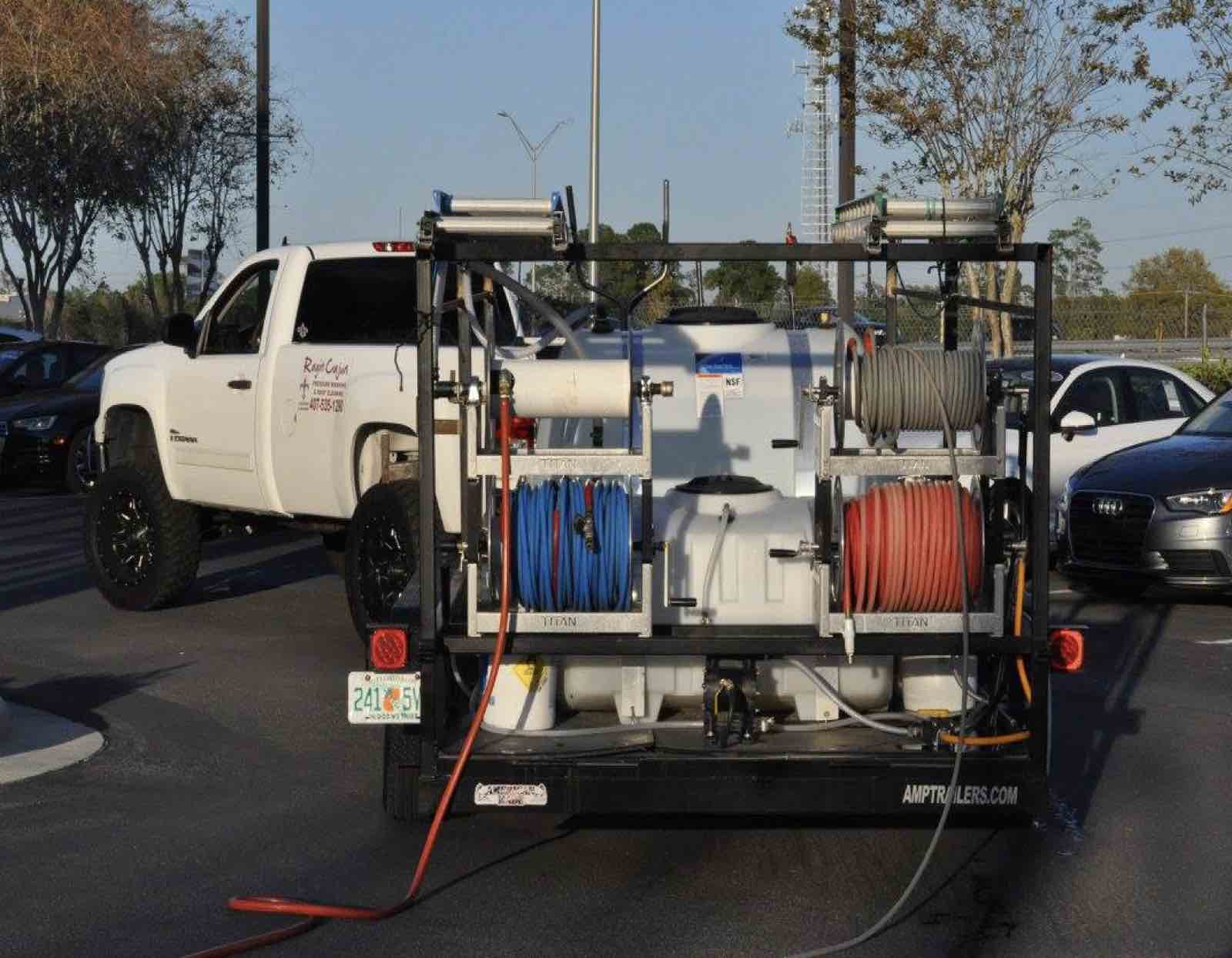
Here in Longwood, we deal with humidity that doesn't quit, afternoon thunderstorms rolling through like clockwork, and a mold season that stretches on forever. That combo means Hardie siding picks up algae, mildew, and grime quicker than homeowners expect. Most folks don't even notice it building until the siding looks dull or streaked. By that point? The grime's been sitting there for months. It's one of the most common calls we get for professional pressure washing in Longwood and one of the most mishandled jobs in the industry.
James Hardie, the manufacturer, publishes cleaning guidelines for their products. Low-pressure washing is fine. High-pressure washing can force water behind the planks, into the joints, and through the paint film. Once water gets trapped behind fiber cement, it doesn't dry out quickly. That moisture leads to swelling, cracking, and paint failure. [Source: jameshardie.com maintenance guidelines]
Here's what most online guides completely skip over. They treat Hardie like any other hard surface and just say "power wash it." Wrong call. The issue isn't the surface itself. It's the edges, the butt joints, and the spots where caulk has aged or pulled away. We see this constantly on homes built in the early 2000s around Seminole County. Siding looks fine from the street. But up close, the caulk lines are cracked and the paint at the bottom edge of each plank is starting to lift.
Before any water touches Hardie Plank, walk the entire facade. Check for problem spots. Look at the horizontal seams between planks. Look where the siding meets window and door trim. Look at the bottom course near the foundation. Caulk missing or cracked anywhere? Water will find that gap under pressure. A garden hose won't force it in. A pressure washer set above 1,500 PSI absolutely will.
The paint system on Hardie Plank also behaves differently than paint on wood or stucco. James Hardie uses a baked-on finish at the factory, but repainted homes in our area usually have one or more layers of exterior latex over that original coat. High pressure can cut right through those paint layers at the edges of each plank, especially on the bottom lip. That's the most exposed surface on the board and the first place you'll see failure. Once that edge paint breaks down, the raw fiber cement underneath takes a hit from every single rain event until someone repaints it. [Source: jameshardie.com product care documentation]
Direction matters too. Hardie Plank is installed with each board overlapping the one below it. Water's supposed to run down and off. Spray upward, angling the wand up under the laps, and you're pushing water directly into the overlap joint. We had a job last spring on a home off SR-434 where a homeowner had done exactly that with a rented machine. The bottom three courses had to be pulled and replaced because the substrate behind them had been wet long enough to grow mold inside the wall cavity. Nobody wants to learn that lesson firsthand. Expensive doesn't begin to cover it.
So before you decide how to clean your Hardie siding, or whether to hire someone, understand what you're working with. The material can handle water. It can't handle the wrong kind of water application.
Pressure Settings and Nozzle Choice Determine Whether Washing Is Safe
You're probably already standing in your driveway eyeing that pressure washer and wondering how much damage you could actually do. Fair question. And here's what most guides get completely wrong. They say "use low pressure" and move on like that's enough information. It's not. Low pressure means nothing if you're holding the wrong nozzle. The nozzle controls how much force hits your siding, and with Hardie Plank, that force is everything.
James Hardie recommends washing their fiber cement siding at no more than 1,500 PSI, per their published product care guidelines. We've seen homeowners in Longwood show up with rental units pushing 3,000 PSI or higher, thinking more pressure means cleaner siding. It doesn't. It means cracked paint, blown caulk joints, and water forced behind the boards.
The sweet spot for Hardie Plank sits between 500 and 1,500 PSI. Stay in that range and you're washing safely. Go above it and you're gambling with the integrity of the finish. Especially on older installs where the factory paint has already weathered a few Central Florida summers.
Nozzle Degrees Matter More Than You Think
The nozzle tip controls the spray angle. The spray angle controls how concentrated the pressure is at the surface. A zero-degree red tip focuses all that water into a pinpoint stream. That stream will strip paint off Hardie Plank like it's nothing. Seriously. We pulled a red tip off a pressure washer on a job in Longwood last spring. The homeowner had no idea it was even attached. There was a clean stripe of bare fiber cement down one board where the paint had been blasted completely off. Twenty minutes of work. Weeks of headache.
For Hardie Plank, stick with a 25-degree or 40-degree tip. The 25-degree green tip gives you enough force to move dirt and mildew without concentrating pressure into a damaging stream. The 40-degree white tip is gentler still. Good for a light rinse or for areas near windows and trim where you want to back off the force entirely.
Some crews use a soap nozzle (typically 65 degrees) for applying cleaner, then switch to the 25-degree for rinsing. Solid approach. The detergent does the heavy lifting on organic growth, and the rinse just clears it away. You're not relying on brute force to clean. Chemistry first. Pressure second.
Distance From the Surface Is the Other Variable Nobody Talks About
Even with the right PSI and the right nozzle, standing too close still causes damage. Holding a wand six inches from the siding with a 25-degree tip concentrates the spray enough to chip paint or drive water into seams. Keep the nozzle at least 12 to 18 inches from the surface. Always. Most people find that once they back off, the results are actually better. More even coverage, less risk of streaking.
On a single-story home, that's easy to manage. Two-story homes are where people get into trouble. They lean ladders against the siding or crank up the pressure to reach from the ground. Both are bad ideas. Pressure washing from a ladder is a safety risk, plain and simple. And boosting PSI to reach higher just creates the same force problem at a greater distance.
A downstream chemical injector and a low-pressure application wand solve the height problem without the risk. Apply your cleaner at low pressure, let it dwell, then rinse from a safe distance. That's how we handle two-story fiber cement work in Longwood without wrecking the finish or putting anyone on an unstable ladder.
Look, the equipment settings aren't complicated once you understand what you're actually controlling. PSI under 1,500. Green or white tip. Wand at least a foot from the surface. Those three things together make the difference between a clean house and a repair bill. If any part of that feels uncertain, calling a pro is the safer bet than guessing with your siding.
Need help with can you safely power wash hardie plank siding without causing damage??
Call now for a free estimate. Ragin Cajun is ready to help.
Soft Washing Is Often the Smarter Alternative for Hardie Plank
Most homeowners come to us asking about power washing. That's the wrong starting question for Hardie Plank.
Soft washing is almost always the better call. Not because power washing can't work (it can, under the right conditions), but because soft washing removes the same grime with far less risk to your siding. Yeah, it sounds less satisfying than blasting everything with high pressure. But the results speak for themselves.
Soft washing uses low water pressure, typically under 500 PSI, combined with a cleaning solution that breaks down dirt, mold, mildew, and algae at the source. According to the Pressure Washing Resource Association, soft washing relies on dwell time and chemistry rather than force to do the actual cleaning work. [Source: Pressure Washing Resource Association, SOURCE: industry trade body] That matters a lot for Hardie Plank. Tough material, sure. But it's got a painted or factory-primed surface that doesn't love high-pressure water blasting directly into it.
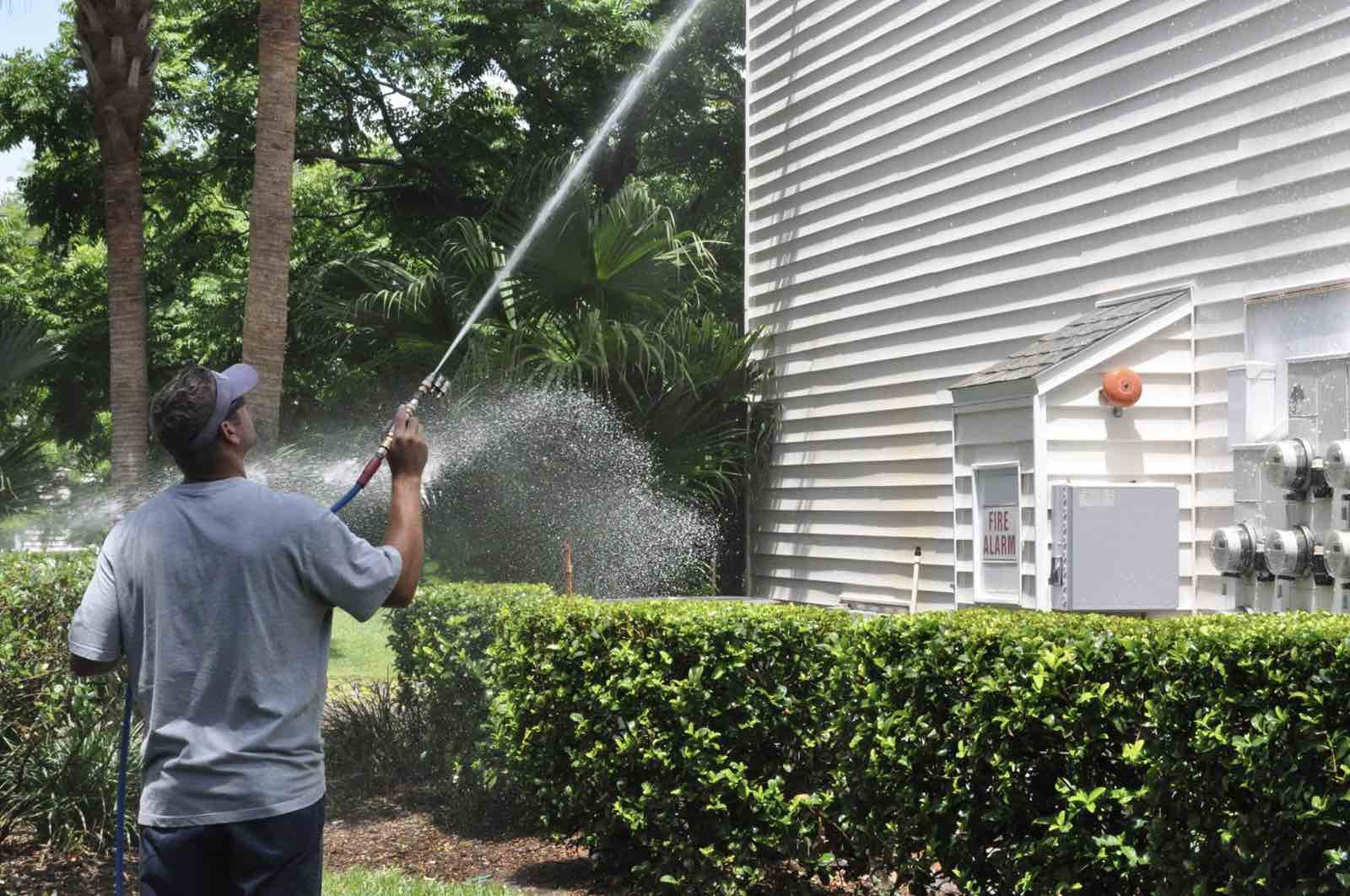
The cleaning solution used in soft washing typically includes a diluted sodium hypochlorite mix, surfactants, and sometimes a neutralizer. The surfactants help the solution cling to vertical surfaces longer. That dwell time kills the biological growth (algae, mold spores, mildew) rather than just blasting it off the surface temporarily. Hit it with pressure only and you're knocking visible growth off. The root structure often stays behind and regrows faster than you'd expect. [Source: University of Florida IFAS Extension, SOURCE: extension publication on exterior mold]
Here in Longwood, Central Florida humidity runs almost year-round. Algae and mildew aren't just a spring cleaning problem. Soft washing addresses the biology of that growth. Not just the appearance.
We've cleaned a lot of Hardie Plank siding around Longwood and Seminole County over the years, and the pattern is consistent. Jobs where a previous contractor used too much pressure often leave the surface looking chalky and worn. Not from the siding failing. From the finish taking a beating it didn't need to take. That's almost always the culprit when homeowners call us about siding that looks worse after a cleaning than before it.
Thing is, we notice this all the time. Homeowners rinse their Hardie Plank with a garden hose, think it looks clean, then wonder why the green tint comes back within six weeks. Rinsing doesn't kill anything. Soft washing does. Soft-washed surfaces typically stay cleaner two to three times longer than surfaces that were only pressure rinsed. [Source: Softwash Systems industry data, SOURCE: manufacturer/trade]
The application process matters too. A good soft wash on Hardie Plank starts from the bottom up with solution application, then rinses top to bottom at low pressure. This prevents streaking and keeps the solution from drying on the surface before it's done working. We worked on a two-story home off SR-434 last fall where the previous wash had left streak lines baked into the surface from a hot afternoon application. Totally avoidable. But it took us an extra hour to address before we could even start the actual cleaning.
Low pressure also protects the joints and caulked seams between planks. High pressure can work water behind those seams if the caulk has any age on it. Soft washing keeps the water volume low enough that you're not forcing moisture into places it shouldn't go.
So if someone tells you soft washing is just "gentle cleaning" and not as effective, that's flat out wrong. The cleaning chemistry does the heavy lifting. Pressure is just delivery. For a surface like Hardie Plank, where the goal is clean siding that stays clean without damaging the finish or the substrate, soft washing isn't the cautious option.
It's the smart one.
If your Hardie Plank is due for a cleaning and you'd rather not risk the finish, give us a call. Visit our Hardie Plank siding cleaning services page for more detail on how we handle this work in Longwood.
Frequently Asked Questions
Can you safely power wash Hardie Plank siding without damaging it?
Yes, you can wash Hardie Plank safely, but only with the right pressure and nozzle. James Hardie recommends staying at or below 1,500 PSI. Use a 25-degree or 40-degree tip. Never angle the wand upward under the laps. High pressure forces water behind the boards, which leads to swelling, mold, and paint failure. Done correctly, low-pressure washing keeps your siding clean without causing damage.
Why is Hardie Plank siding so hard to keep clean in Longwood?
Longwood's humidity, afternoon thunderstorms, and long mold season create the perfect conditions for algae and mildew to build up fast. Hardie Plank absorbs moisture differently than vinyl or wood siding. That means organic growth takes hold quickly and is harder to rinse away. Most homeowners don't notice the buildup until the siding looks dull or streaked. By then, the grime has been sitting for months. Regular low-pressure washing is the best way to stay ahead of it here in Central Florida.
When should you call a professional instead of washing Hardie siding yourself?
Call a professional if you notice cracked caulk, lifting paint at the bottom edge of the planks, or any gaps where the siding meets window and door trim. Those are spots where water will get in under pressure. Homes built in the early 2000s around Seminole County often have aged caulk lines that look fine from the street but are cracked up close. If you're not sure what to look for, a pro can walk the facade first and catch problems before any water is applied.
What PSI is safe for washing Hardie Plank siding?
The safe range is between 500 and 1,500 PSI, according to James Hardie's published product care guidelines. Anything above 1,500 PSI risks blowing out caulk joints and forcing water behind the planks. Many rental pressure washers push 3,000 PSI or higher. That's too much for fiber cement. Always check your machine's output before you start. When in doubt, go lower. More pressure does not mean cleaner siding — it means more risk.
What is the most common mistake homeowners make when power washing Hardie siding?
The biggest mistake is spraying upward and angling the wand under the lap joints. Hardie Plank is designed so water runs down and off. Spray up into the overlaps and you push water directly into the joint. We saw this on a home off SR-434 where the bottom three courses had to be replaced because mold had grown inside the wall cavity. Another common mistake is using a zero-degree red tip nozzle, which can strip paint off the boards in seconds.
Does the paint on Hardie Plank make it more vulnerable to pressure washing damage?
Yes, especially on repainted homes. The factory finish from James Hardie is baked on and durable. But many homes in Longwood have one or more layers of exterior latex painted over that original coat. High pressure can cut through those paint layers at the bottom lip of each plank. Once that edge paint breaks down, raw fiber cement is exposed to every rain event until someone repaints it. That's why pressure and nozzle choice matter so much on Hardie siding specifically. [Source: jameshardie.com product care documentation]