
How Much Does It Cost to Pressure Wash a 1,500 Square Foot Driveway in 2026?
The Typical Price Range for a 1,500 Sq Ft Driveway Pressure Wash
Here's the honest answer: it depends on way more than just size. You've probably been Googling this hoping for one clean number. Fair enough. Size is still the starting point, so let's work from there.
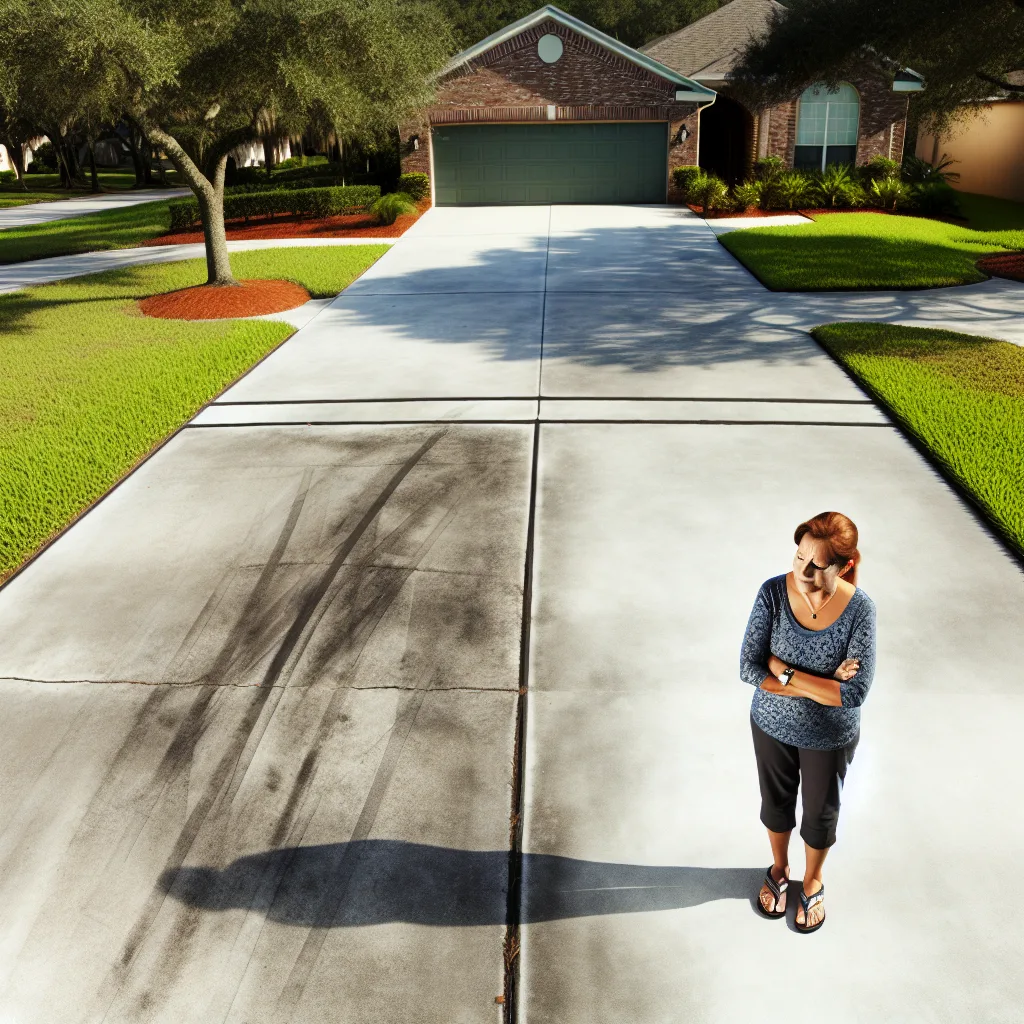
A 1,500 sq ft driveway is a solid benchmark. That's roughly a two-car driveway with a short apron, and it's extremely common in Longwood neighborhoods like Wingfield Reserve and the Markham Woods Road corridors. Most homeowners in Central Florida pay somewhere between $150 and $300 for standard pressure washing in Longwood, FL at this size, based on data compiled by Angi and HomeAdvisor. That range covers basic concrete cleaning with a surface cleaner attachment. No sealing. No stain treatment. No chemical pre-treatment for heavy oil or rust.
Here's the thing most guides get wrong: they quote that range like it's a flat rate. It isn't. The low end assumes your driveway is relatively clean, easy to get to, and doesn't have years of embedded mildew or tire marks baked in by Florida sun. We pull up to driveways in Longwood that look manageable from the street and turn into two-hour jobs once we get close. The surface matters. A lot.
Concrete driveways are the most common around here, and they respond well to pressure washing. But concrete that hasn't been cleaned in three or more years, especially in shaded areas where algae and mold take off fast, needs more time and chemical pre-treatment. That pushes the job toward the higher end of the range.
Pavers? Totally different story. If your 1,500 sq ft driveway is paver-set, the process slows way down and gets more careful. You can't blast pavers at the same PSI you'd use on concrete without risking joint sand loss or surface pitting. Lower pressure, longer dwell time on a chemical pre-soak, and more passes means higher cost. Paver driveways in this size range often fall between $225 and $375, according to HomeAdvisor national data, and Central Florida jobs track close to that.
Stamped concrete sits in a similar spot. All those grooves and textures hold dirt and organic growth like crazy, and you need the right nozzle angle plus a lower pressure setting to avoid etching the surface. Last spring we cleaned a stamped concrete driveway off Ronald Reagan Boulevard, roughly 1,400 sq ft, and it took nearly twice as long as a plain concrete job we did the same week. Same square footage. Very different job.
One factor that genuinely moves the price? How long it's been since the last cleaning. Florida's humidity and heat speed up biological growth on any hard surface. According to the University of Florida IFAS Extension, mold and algae colonize exterior concrete surfaces faster in humid subtropical climates than in drier regions [Source: University of Florida IFAS Extension, edis.ifas.ufl.edu]. A driveway cleaned annually stays cleaner longer and costs less per visit than one that goes three or four years between cleanings.
Timing matters too. Longwood gets hammered with afternoon storms from June through September. Most professional crews schedule driveway work in the morning during rainy season, which can mess with scheduling availability and sometimes bump pricing if a job needs to be split across visits.
And square footage alone doesn't tell the whole story. A 1,500 sq ft driveway with a steep slope, tight landscaping on both sides, or a decorative border adds real complexity. Access to a water source on your property factors in too. Most crews bring their own water supply, but some smaller operators charge extra if they need to run a long hose from a street connection.
The clearest way to understand what your specific driveway will cost is to have someone walk it with you. Surface type, condition, and access together tell the real story. Not just the square footage.
Key Factors That Change the Final Cost of Driveway Pressure Washing
Most people assume pressure washing is pressure washing. Turn on the machine, spray the driveway, done.
The jobs we run in Longwood tell a very different story. Two driveways that are both 1,500 square feet can take completely different amounts of time, water, and labor. That gap shows up in the final number. So what actually drives cost?
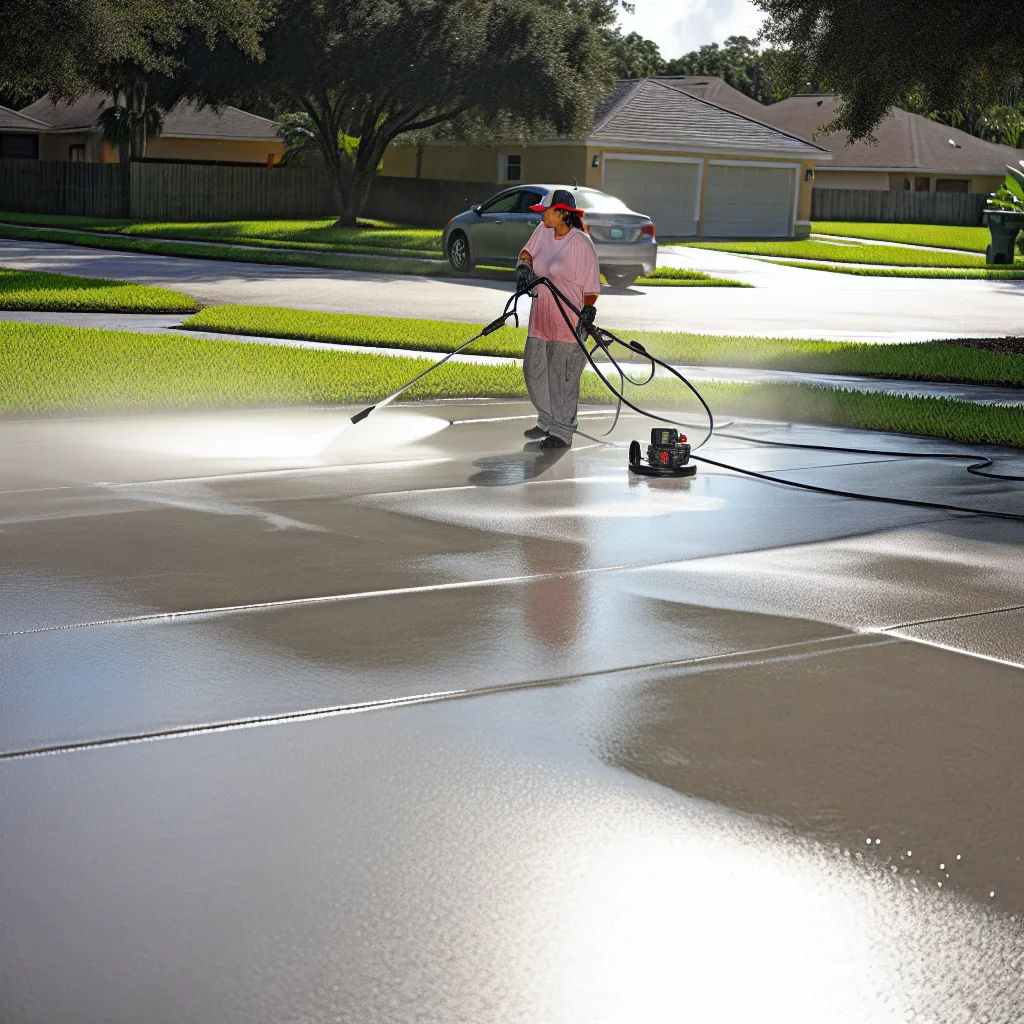
The single biggest variable is surface condition. Period. A driveway that gets washed once a year is a different animal than one that hasn't been touched in four or five years. Central Florida's humidity means algae, mold, and mildew build up fast, especially on concrete sitting under oak trees or near a retention pond. We worked on a driveway in Longwood last summer that looked gray from the street. Turned out it was mostly green underneath. That job took twice as long as a clean driveway the same size. We see this constantly.
Surface type matters just as much. Concrete, pavers, asphalt, and exposed aggregate all respond differently to pressure. Pavers have joints filled with polymeric sand, and too much pressure blasts that sand right out, leaving you with a separate repair job on your hands. Concrete can usually handle higher PSI, but older slabs with cracks need a lighter touch. Asphalt is the most delicate of the bunch. We almost always drop pressure and slow down on asphalt to avoid chewing up the surface.
Most guides skip past staining. Big mistake. Oil stains, rust, and fertilizer burns don't come off with water alone. They need a pre-treatment dwell time, sometimes a second pass, and occasionally a specialty detergent. Rust from well water irrigation (which is ridiculously common in Seminole County) is even harder. Iron deposits bond to concrete and require a specific chemical treatment before the pressure wash even starts. According to the Cleaning Equipment Trade Association, pre-treatment steps can add 20 to 40 percent to total job time on heavily stained surfaces .
Got a circular driveway with a center island? Tight turns near landscaping beds, a parking pad that wraps around a garage? Those add setup time and repositioning. We've done jobs in Longwood where the driveway design alone, not the size, added a full hour to the estimate. Stairs, curbs, decorative edging. All of it slows things down.
Now here's something most people don't think about until we bring it up: water source and pressure at the spigot. If your outdoor faucet runs at low pressure or low volume, the machine can't perform at full capacity. We've shown up to jobs where the home's water supply barely kept up with the machine's intake. Not common, but it happens. And it affects how long the job takes.
Then there's the question of what happens after the wash. Some homeowners in Longwood want a sealer applied to their concrete or pavers right after cleaning. That's a separate service, but it affects scheduling. Concrete needs to dry completely, usually 24 to 48 hours depending on humidity, before sealer goes down. If you're planning ahead on that step, it helps to understand the full picture of driveway sealing costs and what to expect before you book. According to the Portland Cement Association, surface moisture above 4 percent can cause sealer adhesion failure . Planning to seal? Factor that drying window into your timeline, especially during Florida's rainy season between June and September.
All of these variables stack on top of each other. Size is just where the conversation starts.
Need help with how much does it cost to pressure wash a 1,500 square foot driveway in 2026??
Call now for a free estimate. Ragin Cajun is ready to help.
What the Pressure Washing Process Actually Looks Like on a Driveway
You're probably staring at a driveway that's been bugging you for a while. That gray-green film. The dark streaks near the garage. Maybe some rust spots from the irrigation system. Most people picture pressure washing as someone pointing a wand at concrete and blasting away.
That's not really how it works.
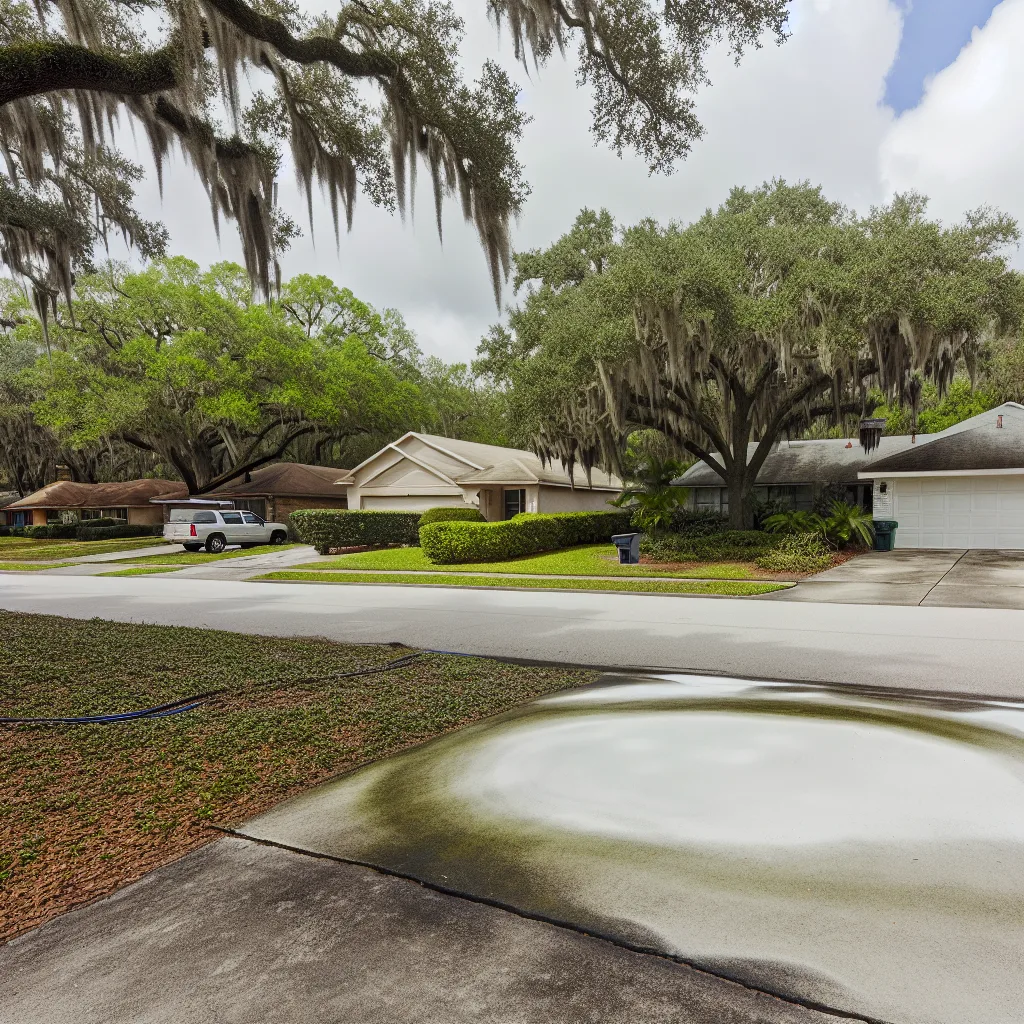
Not if you want results that last more than a week. The actual process has a few distinct steps, and skipping any one of them is where jobs go sideways. Here's what we do on a standard concrete driveway job in Longwood, start to finish.
First, we walk the surface. We're looking for oil stains, rust spots, mold growth, and any cracked or lifted sections. Cracked concrete matters because high pressure can push water under the slab and make existing damage worse. We note those areas before we ever turn on a machine. On a recent job off SR-434, we found three hairline cracks the homeowner didn't know were there and flagged them before we started. No surprises at the end.
After the walkthrough, we pre-treat. This is the step most guides rush past, and it's where a huge chunk of the real cleaning actually happens. A degreaser or alkaline detergent goes down on oil stains and high-traffic zones. We let it dwell. Usually 5 to 10 minutes depending on how baked-in the staining is. According to the Pressure Washing Resource Association, pre-treatment can improve stain removal effectiveness by up to 60 percent compared to pressure alone . That number tracks with what we see on driveways that have years of motor oil worked into the pores.
Then comes the actual washing. On concrete, we run a surface cleaner attachment rather than a wand. A surface cleaner is a flat, spinning head that keeps pressure even across the whole path, preventing the streaking and tiger-stripe pattern you get when someone just sweeps a wand back and forth. PSI matters here too. Concrete can handle 3,000 to 4,000 PSI, but you've got to read the surface. Older, softer concrete needs a lighter touch. Florida's heat and humidity speed up surface weathering, so driveways here often look older than they actually are .
The surface cleaner pass is slow. Real slow. A 1,500 square foot driveway takes genuine time to do right. Overlapping passes, consistent speed, no rushing the edges. And edges are actually the hardest part. The surface cleaner can't get flush to curbs or expansion joints, so those get hand-wanded. That's where you see the most buildup of algae and dark staining in Central Florida, because water pools there and doesn't dry fast.
After washing, we do a rinse pass to clear loosened debris and any remaining detergent. If detergent dries on concrete in the sun (and in Longwood from April through September it will dry fast), it can leave a hazy residue. The rinse isn't optional. It's part of the job.
Some driveways get a post-treatment too. Heavy biological growth, algae, mildew, that green-black film on north-facing sections, responds to a diluted sodium hypochlorite solution applied after washing. It kills the root structure. Without it, the growth comes back in weeks. Yeah, that's frustrating. We hear from homeowners about it all the time. According to the EPA, sodium hypochlorite is effective against a broad spectrum of biological contaminants on hard surfaces . We apply it carefully near landscaping beds, which are everywhere in Longwood neighborhoods.
Start to finish, a thorough driveway cleaning takes longer than most homeowners expect. But that time is what separates a job that looks clean for a season from one that looks clean for a week.
The process is the product.
Getting the chemical mix, the pressure settings, and the sequencing right takes real experience with Florida surfaces specifically. Thinking about whether to rent a machine and handle it yourself or call someone who does this daily? The honest answer is that the margin for error is smaller than it looks, especially on pavers or stamped concrete. Give us a call and we can walk through it with you.
If you want to understand how all of this connects to what you'll actually pay, the full breakdown is on our Longwood pressure washing services page.
Frequently Asked Questions
How does Longwood's climate affect how often I should pressure wash my driveway?
Longwood's heat and humidity make driveways get dirty faster than in drier parts of the country. Mold, algae, and mildew grow quickly on concrete here, especially under oak trees or near retention ponds. The University of Florida IFAS Extension confirms that humid subtropical climates speed up biological growth on hard surfaces. Most Longwood homeowners get the best results cleaning their driveway once a year. Waiting longer means more buildup, longer job times, and more work overall.
Does the size of my driveway really determine the final price?
Size is a starting point, but it is not the whole story. Two driveways that are both 1,500 square feet can take very different amounts of time and labor. Surface type, how long it has been since the last cleaning, staining, and access all change the job. A driveway with rust from well water irrigation or years of embedded mildew takes much longer than a clean, flat concrete driveway of the same size. Square footage gives you a baseline, not a final number.
Do neighborhoods like Wingfield Reserve or the Markham Woods Road area have driveways that need special cleaning?
Yes, and we see this all the time in those areas. Many homes near Markham Woods Road have large oak trees overhanging their driveways. Shade from those trees keeps the surface damp longer, which speeds up algae and mold growth. Driveways in these neighborhoods often need a chemical pre-treatment before the pressure wash even starts. Some also have paver or stamped concrete driveways that need a slower, more careful approach. The surface condition in shaded Longwood neighborhoods is usually worse than it looks from the street.
Is pressure washing a driveway something I can do myself, or should I hire a professional?
You can rent a pressure washer and do it yourself, but it is easy to cause damage if you are not careful. Using too much PSI on pavers, stamped concrete, or older slabs can pit the surface or blast out joint sand. Professionals know the right pressure settings, nozzle angles, and pre-treatment steps for each surface type. If your driveway has oil stains, rust, or heavy mildew buildup, a professional will get better results. Our driveway pressure washing service page walks through what the full process looks like.
What is a common mistake homeowners make before a driveway pressure wash?
One of the biggest mistakes is assuming all driveways are cleaned the same way. Many people think higher pressure always means a better clean. That is not true. Pavers, stamped concrete, and asphalt all need lower pressure and more careful technique. Blasting pavers at the same PSI used on plain concrete can remove the joint sand between them. That creates a separate repair job. Matching the pressure and pre-treatment to your specific surface type is what gets the best result without causing damage.
How do oil stains or rust affect the pressure washing process?
Oil and rust do not come off with water pressure alone. They need a chemical pre-treatment that sits on the surface for a set dwell time before washing begins. Rust from well water irrigation is very common in Seminole County. Iron deposits bond tightly to concrete and need a specific treatment product before the pressure wash starts. According to the Cleaning Equipment Trade Association, pre-treatment steps can add 20 to 40 percent to total job time on heavily stained surfaces (SOURCE CETA). Skipping pre-treatment usually means the stain stays behind.